



Alternatives to zinc oxide: how can the intestine be protected after weaning?
2026-10-09
Weaning remains one of the most challenging periods in pig production. Factors such as separation from the sow, the transition to solid feed and adaptation to a new environment coincide with a digestive system that is still immature. This can result in impaired intestinal function, reduced nutrient utilisation and a greater susceptibility to digestive disorders such as post-weaning diarrhoea.
During this stage, significant changes occur in the gastrointestinal tract. Adaptation to the new diet can affect the structure and function of the intestinal mucosa, compromising nutrient digestion and absorption at a time when maintaining growth and production efficiency is particularly important.
For this reason, nutritional strategies used during this stage should aim to facilitate the piglet’s adaptation to this new phase of production.
The challenge of finding alternatives to zinc oxide
For years, high doses of zinc oxide (ZnO) were used to help control digestive problems associated with the post-weaning period. Restrictions on its use have prompted the pig sector to seek alternatives.
However, the challenge is not simply to replace one ingredient with another, but to ensure that the piglet’s intestine maintains its functionality and can sustain productive performance during this critical stage.
This has increased interest in nutritional strategies aimed at supporting intestinal physiology and helping to maintain digestive stability and performance in weaned animals.
Enterocytes: key cells
One particularly promising strategy is to act directly on enterocytes, the cells responsible for essential functions of the intestinal mucosa.
These cells are involved in nutrient digestion and absorption and form part of the intestinal barrier. Therefore, supporting their renewal and proper function helps to maintain the structure and functionality of the intestinal mucosa and optimise nutrient utilisation.
The structure of the mucosa is closely linked to its functional capacity. Intestinal villi provide a large surface area for absorption, while the crypts are involved in cell renewal.
After weaning, changes to this structure can compromise the intestine’s ability to utilise dietary nutrients effectively. Therefore, maintaining a functional intestinal mucosa is one of the key factors in supporting the piglet’s adaptation after weaning.
Intestinal conditioning pronutrients: acting on intestinal physiology
Intestinal conditioning pronutrients act on enterocytes by stimulating the expression of genes involved in the renewal and function of the intestinal mucosa.
One of their main effects is to promote the integrity of tight junctions, structures that connect intestinal cells and regulate paracellular permeability. In vitro studies conducted with Alquernat Nebsui show a reduction in this permeability, consistent with an improvement in intestinal barrier function.
Furthermore, gene expression analyses identified genes associated with cell adhesion, proliferation, the immune response and metabolism. These processes help to maintain a functional mucosa and adequate nutrient absorption.
Thus, pronutrients help to condition the intestine by acting on the enterocytes themselves, a mechanism of particular interest during the post-weaning period, when preserving intestinal integrity is essential.
Evaluation against zinc oxide in weaned piglets
An evaluation conducted by Fujian Agriculture and Forestry University (China) investigated the effects of Alquernat Nebsui on productive parameters and post-weaning diarrhoea.
The trial lasted 30 days, from 28 to 57 days of age, and included 33 piglets. A basal diet supplemented with Alquernat Nebsui at 0.5 kg/t was compared with a basal diet supplemented with ZnO at 2 kg/t.
Productive results
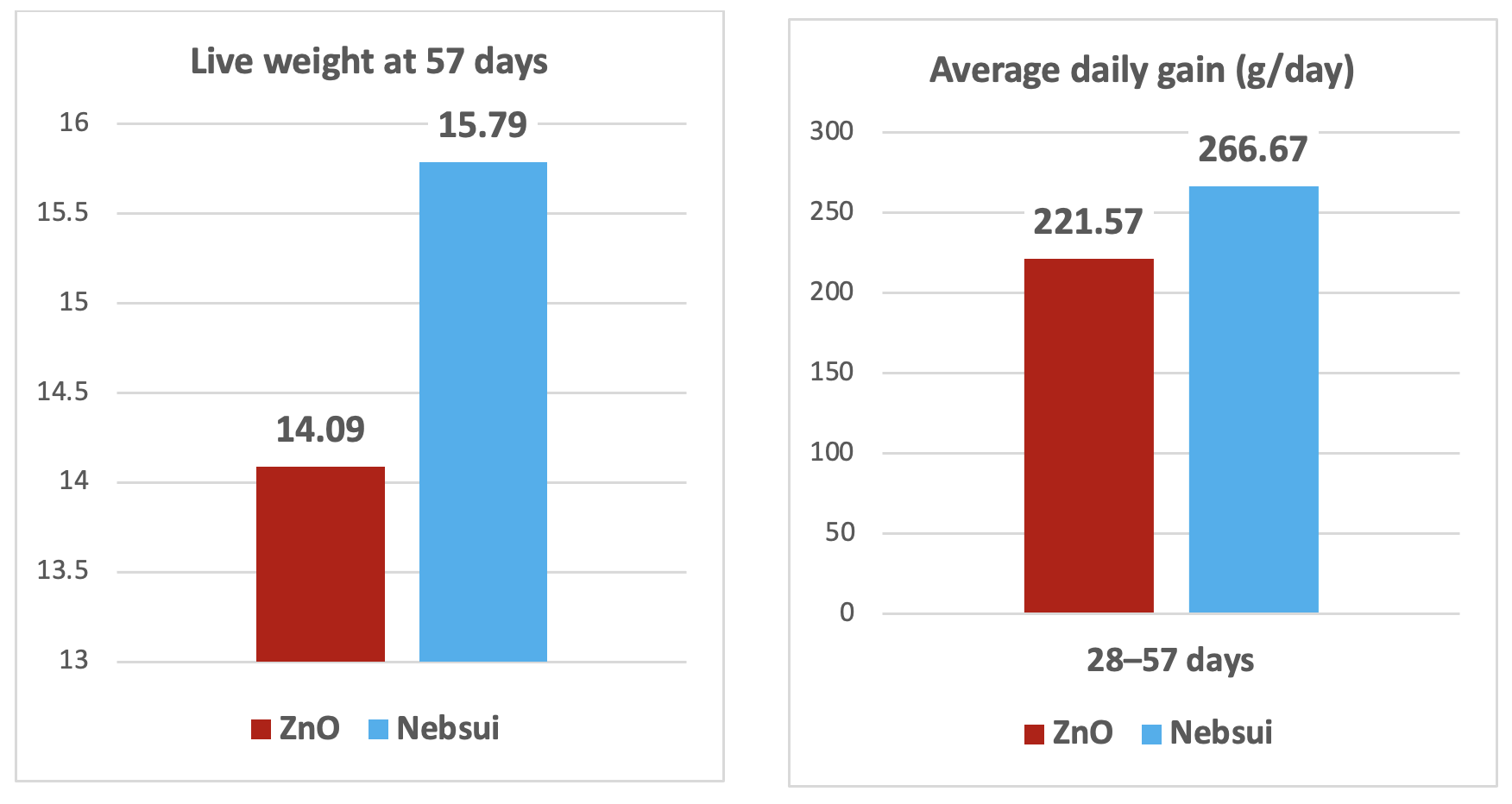
At 57 days of age, the animals supplemented with Alquernat Nebsui achieved an average live weight of 15.79 kg, compared with 14.09 kg in the ZnO group, a difference of 1.70 kg. Average daily gain over the entire period, between days 28 and 57, was 266.67 g/day with Alquernat Nebsui compared with 221.57 g/day with ZnO.
Incidence and severity of diarrhoea
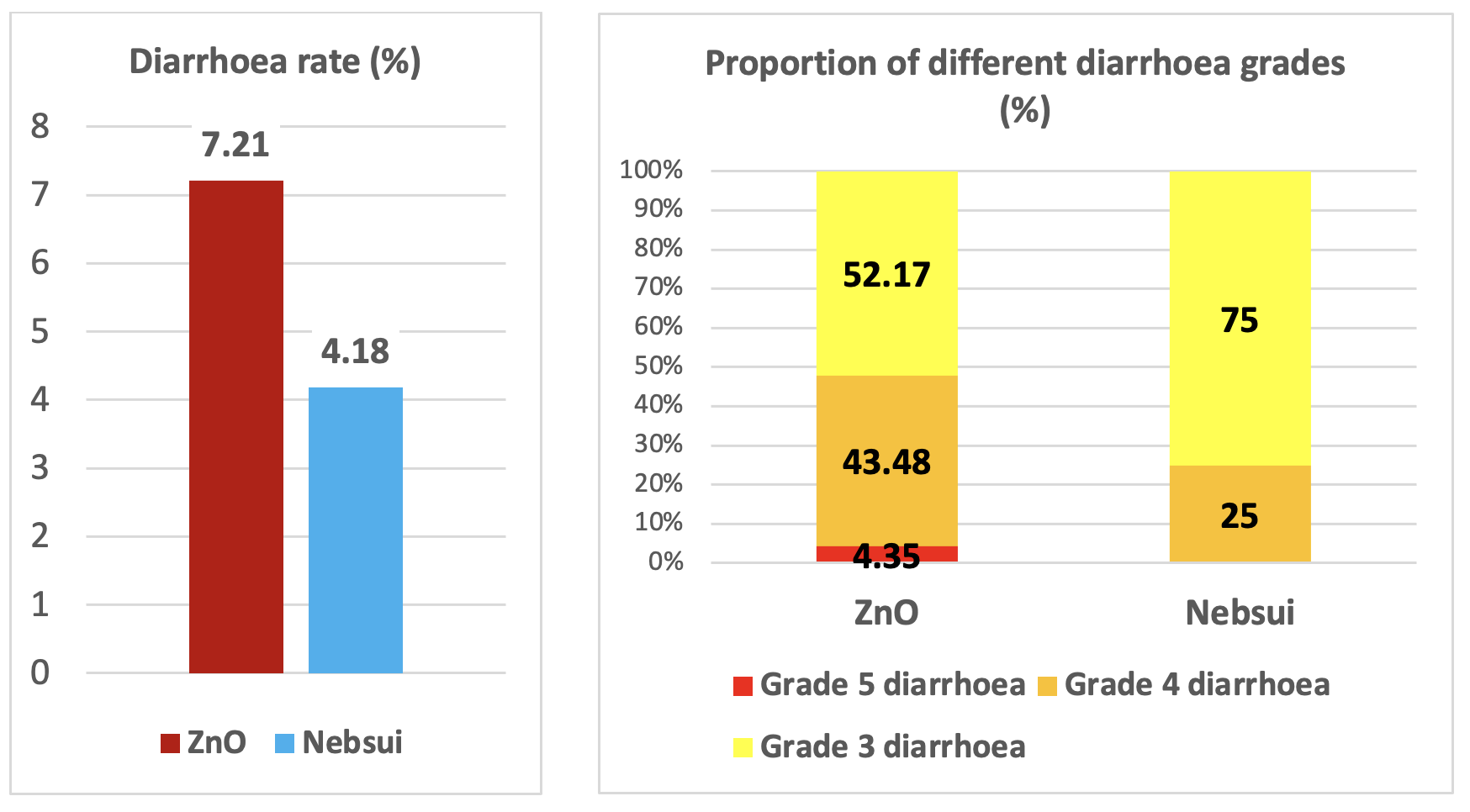
The evaluation also showed differences in the incidence of diarrhoea. The recorded rate was 4.18% in the Alquernat Nebsui group compared with 7.21% in the ZnO group, corresponding to an approximate relative reduction of 42%.
The distribution of cases by severity also differed. In the Alquernat Nebsui group, 75% of cases were grade 3 and 25% were grade 4, with no grade 5 cases. In the ZnO group, 52.17% were grade 3, 43.48% were grade 4 and 4.35% were grade 5.
Intestinal structure and functionality
Histological analysis provides additional information on the condition of the intestinal mucosa.
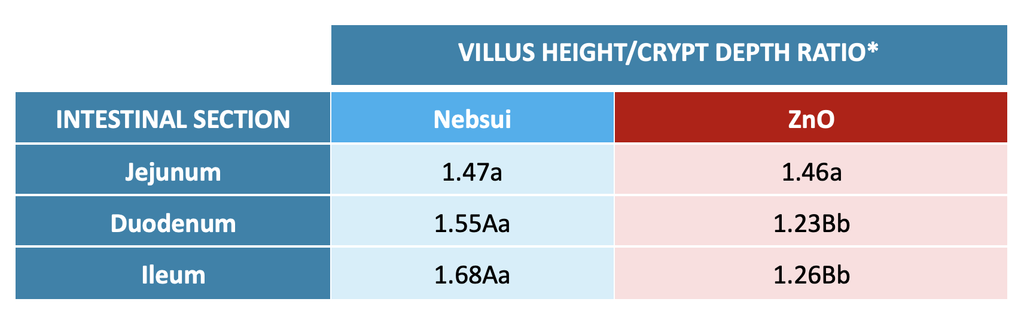
The villus height-to-crypt depth ratio was similar in the jejunum: 1.47 with Alquernat Nebsui and 1.46 with ZnO. However, higher values were observed with Alquernat Nebsui in the duodenum (1.55 versus 1.23) and ileum (1.68 versus 1.26), with statistically significant differences.
A higher villus height-to-crypt depth ratio is associated with a greater surface area for nutrient absorption. These results support the importance of maintaining an appropriate mucosal structure during the post-weaning period.
At the necropsy performed on day 58, a relative intestinal weight of 5.16% with Alquernat Nebsui compared with 5.92% with ZnO was also recorded. In the evaluation, a lower relative intestinal weight is associated with greater organ efficiency.
Evaluation under commercial production conditions
Alquernat Nebsui was also evaluated on a commercial farm in the European Union.
The commercial trial included 2,000 piglets, weaned at 28 days of age and evaluated over 54 days. The reference group received a standard diet with ZnO at 3 kg/t, while the treated group received Alquernat Nebsui at 0.5 kg/t.
The results showed a final weight of 34.20 kg with Alquernat Nebsui, compared with 33.25 kg with ZnO, representing a difference of 950 g per piglet (+2.86%). Mortality was 1.8% in the Nebsui group, compared with 2.5% in the ZnO group.
These results show a higher final weight and lower mortality in the group supplemented with Alquernat Nebsui under the conditions evaluated.
Alquernat Nebsui: physiological support for the intestine during the post-weaning period
Alquernat Nebsui, developed by Biovet, S.A., is based on intestinal conditioning pronutrients that target enterocytes and promote their proper renewal and function.
It can be incorporated into nutritional programmes during the post-weaning period as a natural alternative to zinc oxide, with the aim of supporting intestinal functionality, nutrient utilisation and productive performance in piglets.
The results of the evaluation conducted at Fujian Agriculture and Forestry University showed a lower incidence of diarrhoea, favourable differences in certain productive parameters and a higher villus-to-crypt ratio in the duodenum and ileum compared with the ZnO-supplemented group.
The results obtained on the commercial farm provide complementary information on the use of Alquernat Nebsui under production conditions, although they should be interpreted in light of the differences between the groups evaluated.
Conclusions
The post-weaning period calls for strategies that go beyond the short-term control of digestive disorders. Maintaining enterocyte functionality and an appropriate intestinal mucosal structure can help support the piglet’s digestive adaptation during this critical stage.
In the evaluation conducted in weaned piglets, Alquernat Nebsui recorded a diarrhoea incidence of 4.18% compared with 7.21% with ZnO, together with a live weight at 57 days of 15.79 kg compared with 14.09 kg and higher villus-to-crypt ratios in the duodenum and ileum.
These results support interest in intestinal conditioning pronutrients as a nutritional strategy to support intestinal physiology during the post-weaning period and demonstrate the potential of Alquernat Nebsui as a natural alternative to ZnO during this stage.
Because replacing ZnO should not mean compromising performance: the alternative may lie in enabling the intestine itself to function more effectively.